
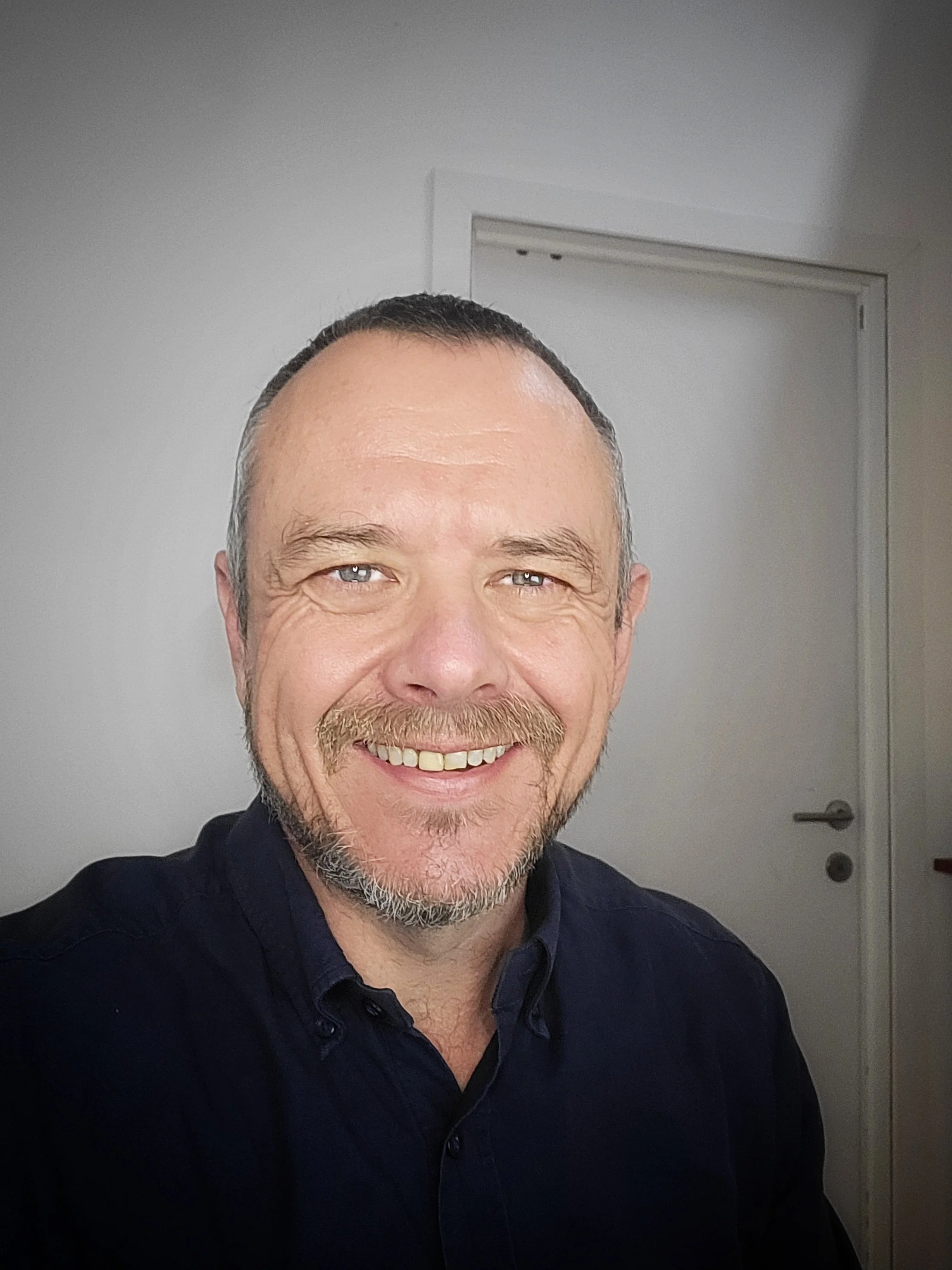
I am an independent philosopher developing Emergent Individual Monism (EIM), a systematic, axiom-based framework that asks what organisational conditions must obtain for a system to have an internal perspective at all — a structural turn in philosophy of mind that distinguishes subjecthood from both functional sophistication and phenomenological texture. My current work is a monograph exploring EIM's implications for consciousness, moral status, personhood, and agency, with particular attention to borderline cases including artificial systems and non-human animals.
I publish under an open-source licence (CC BY-SA 4.0) on the principle that philosophical work functions better as collaborative infrastructure than as proprietary intellectual property. I have aphantasia (hyper-verbal, conceptual rather than imagistic cognition), which shapes how I construct and communicate arguments. I am interested in rigorous critique, not validation: if my arguments have holes, I want to know where they are.
A little Bit More About Me
I left school at nineteen and went straight into the Royal Air Force as an avionics engineer, working on flight systems, radar, radio, navigation, and weapon-aiming systems. The RAF put me through intensive technical training equivalent to degree level, and I left in the late nineties with a solid engineering foundation and a habit of taking systems apart until I understood them.
From there I spent over a decade in the automotive industry. I started at Jaguar Cars, where I helped develop one of the first in-vehicle navigation systems for a luxury vehicle—the Jaguar S-Type. That set the trajectory: I went on to implement navigation systems for Vauxhall, Saab in Sweden, and Nissan, eventually moving from hands-on engineering into strategy and future planning.
In 2007 I relocated to Brussels and shifted into the policy and research side of intelligent transport systems. At ERTICO, an association of companies and authorities, I wrote and won multi-million-euro proposals under the EU's FP7 framework and managed large-scale collaborative projects. I later did the same for the International Road Union, setting up their funding office and winning around twenty million euros in project funding. Alongside this I ran my own consultancy, securing funding for clients and for my own technology ideas, including a gamification concept for transport systems.
After a short career break running a health and wellness business, I returned to what had always been the underlying thread of my life: philosophy and psychology. I am an autodidact in both fields, with additional psychology coursework through the Open University. I now work as an independent researcher, developing Emergent Individual Monism (EIM), a systematic philosophical framework at the intersection of philosophy of mind, cognitive science, and systems theory.
My background is genuinely cross-domain—medical technology, sustainable battery systems, video games and gamification, transport infrastructure—and I think that breadth is an asset. So is the neurological cluster I carry: global aphantasia (which makes me strongly hyperverbal and conceptually focused), autism traits, ADHD, and dyslexia. What looks like a collection of deficits on paper functions in practice as a particular cognitive style: I am good at structuring complex arguments, detecting patterns across disciplines, and holding large conceptual architectures in working memory. Twenty years of writing competitive funding proposals taught me how to build an evidence-based case under pressure; I now apply that skill to philosophical argumentation.
I live in Brussels with my partner Paula, our teenage stepson, and an Irish Wheaten Terrier called Bran. My adult daughter lives in the UK. When I am not writing or reading papers, I am usually walking the dog and thinking about whether split self-models are sufficient for temporal integration.